Legacies on the Land: Photographs by Joan Myers and Patrick Nagatani
Fears about national security peaked after the Japanese military attacked Pearl Harbor, Hawaii, in December 1941. President Franklin D. Roosevelt issued an executive order to remove approximately 120,000 Japanese Americans and people of Japanese descent from their homes on the West Coast to “relocation centers” further inland.
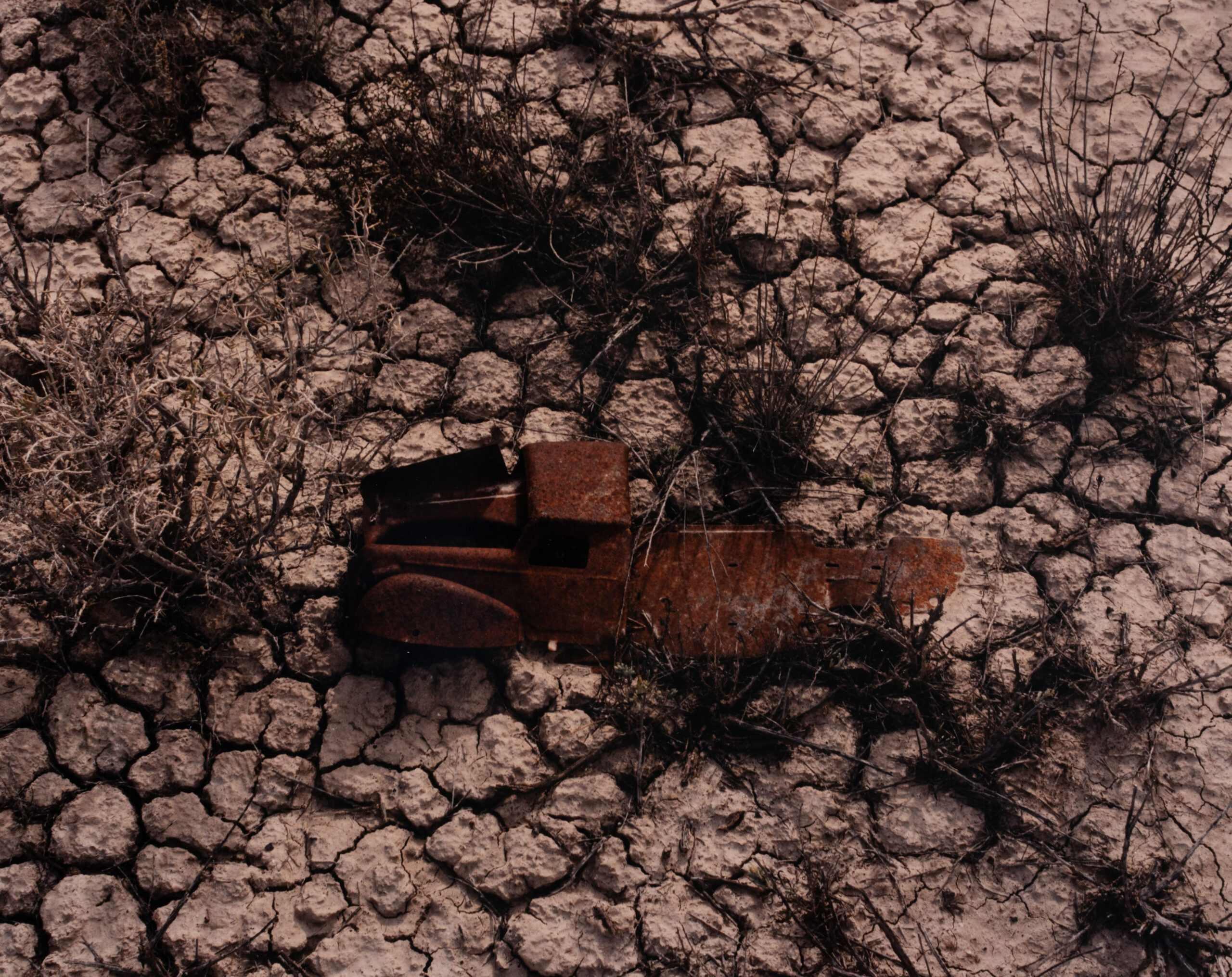
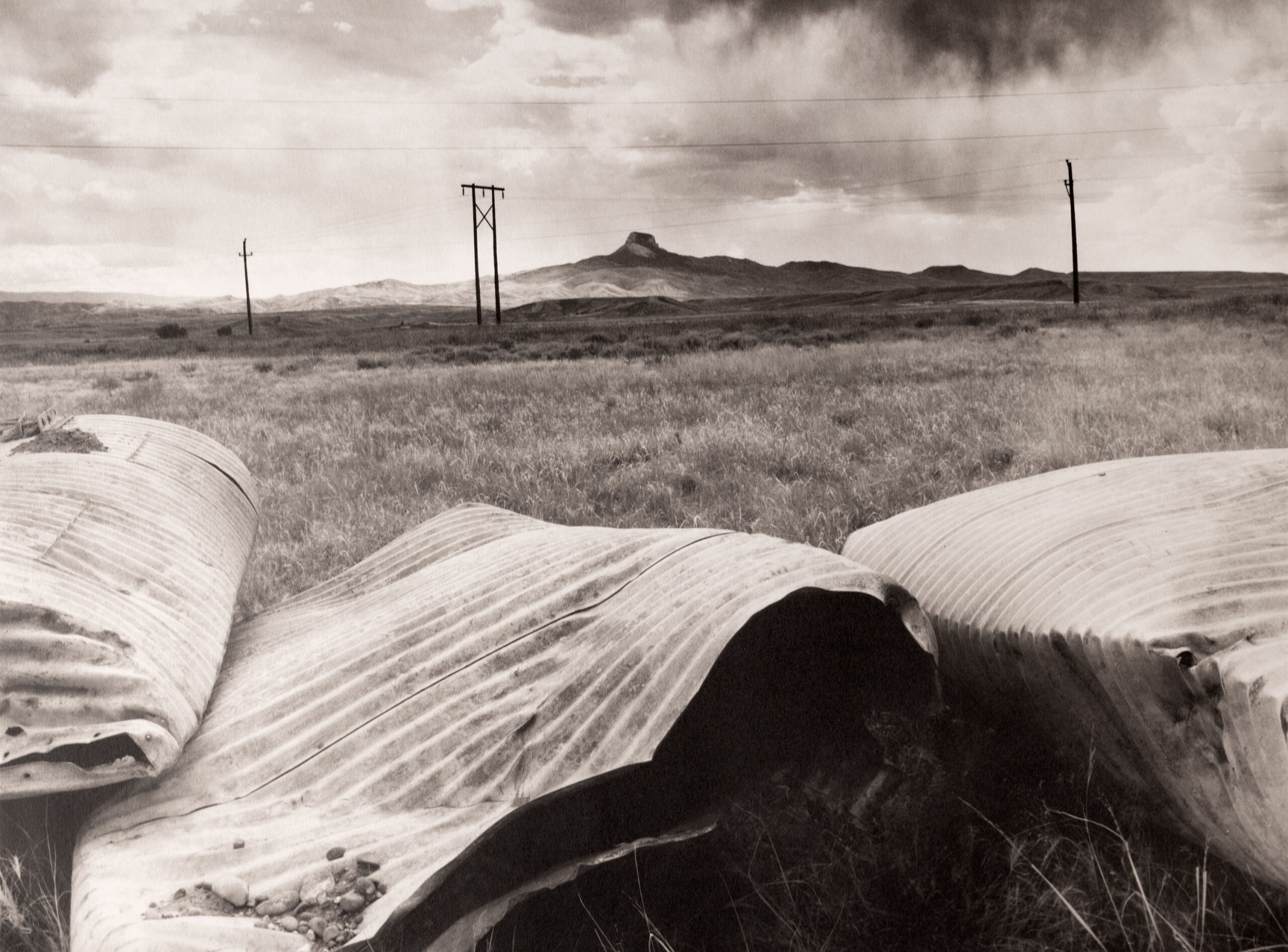
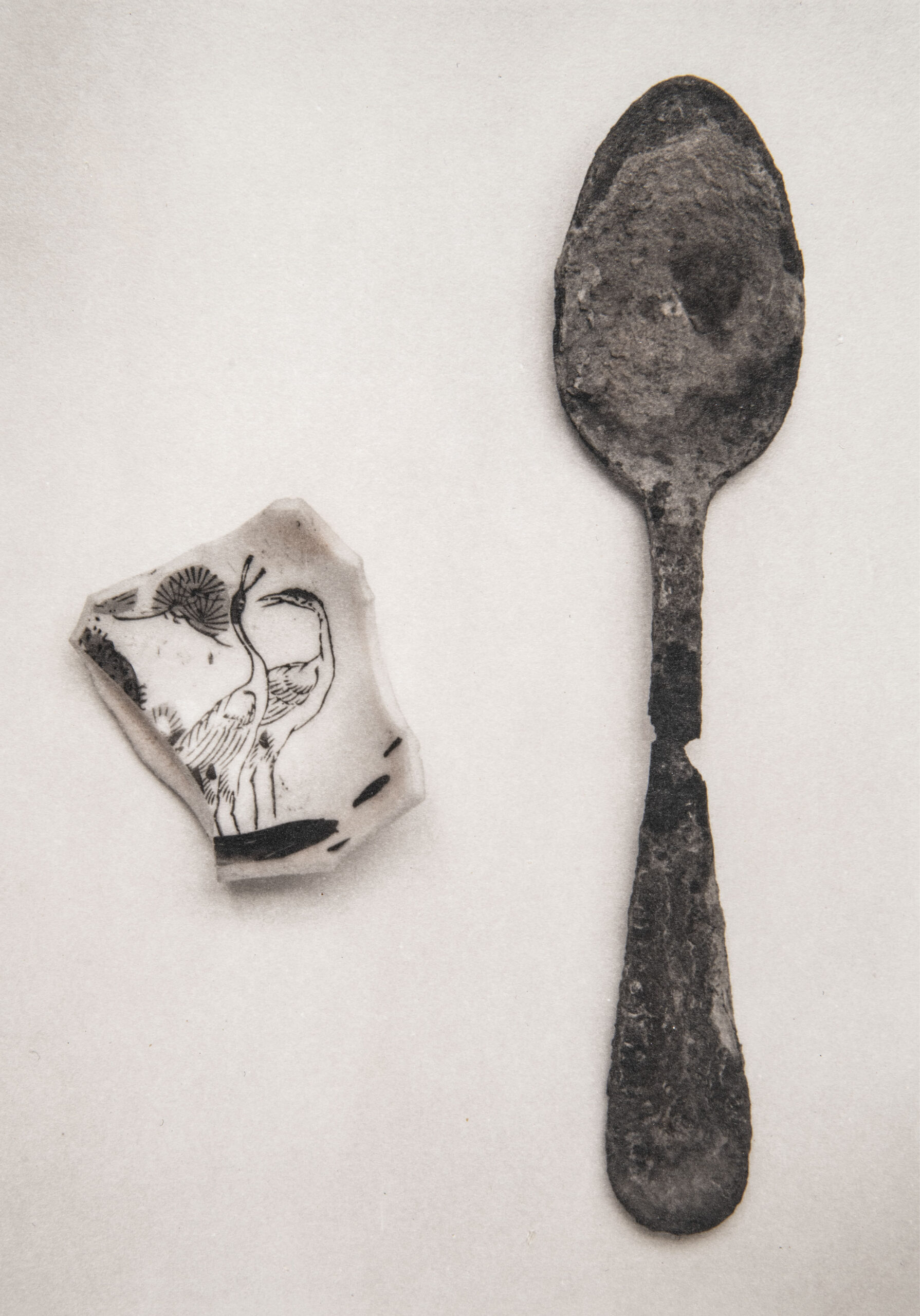
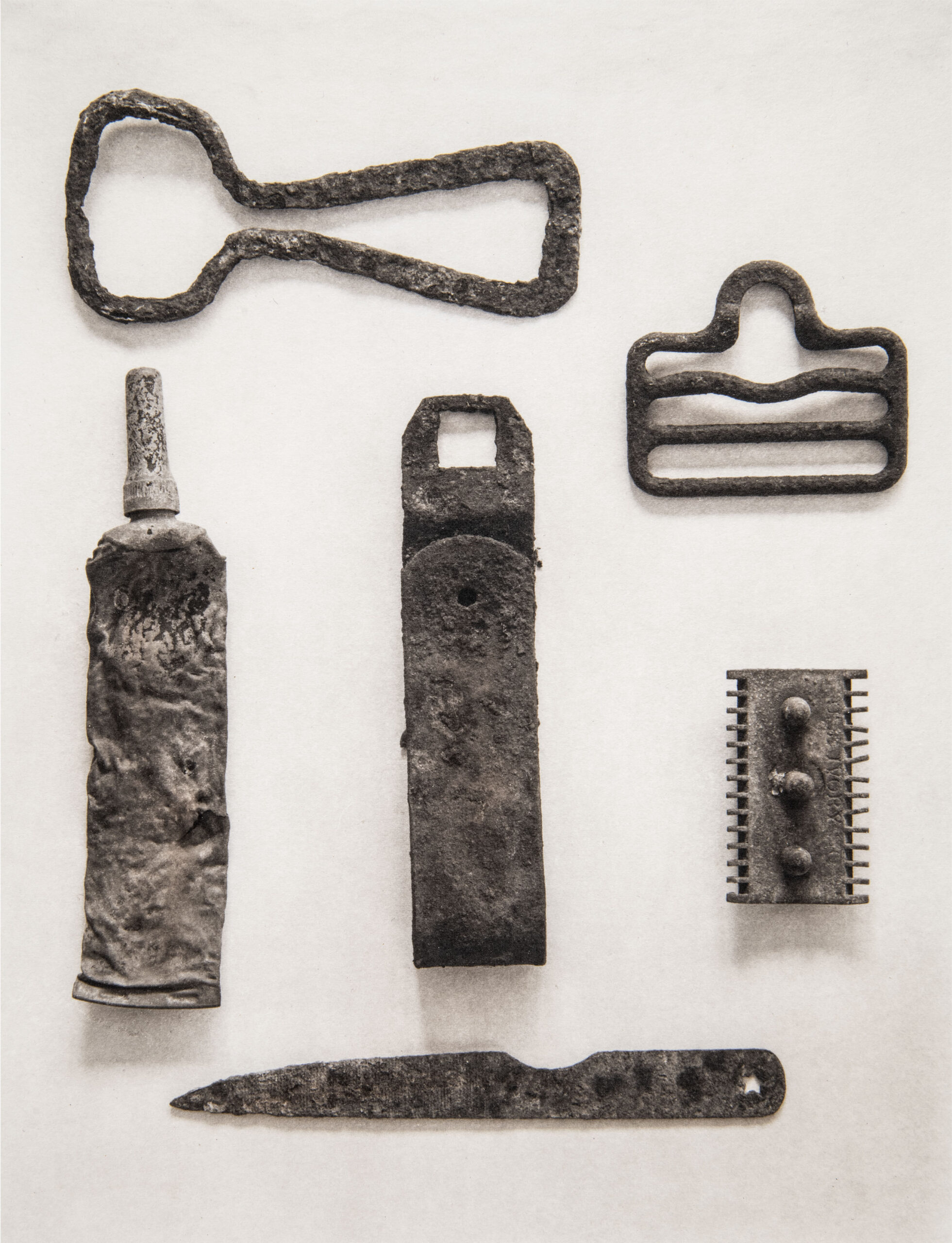
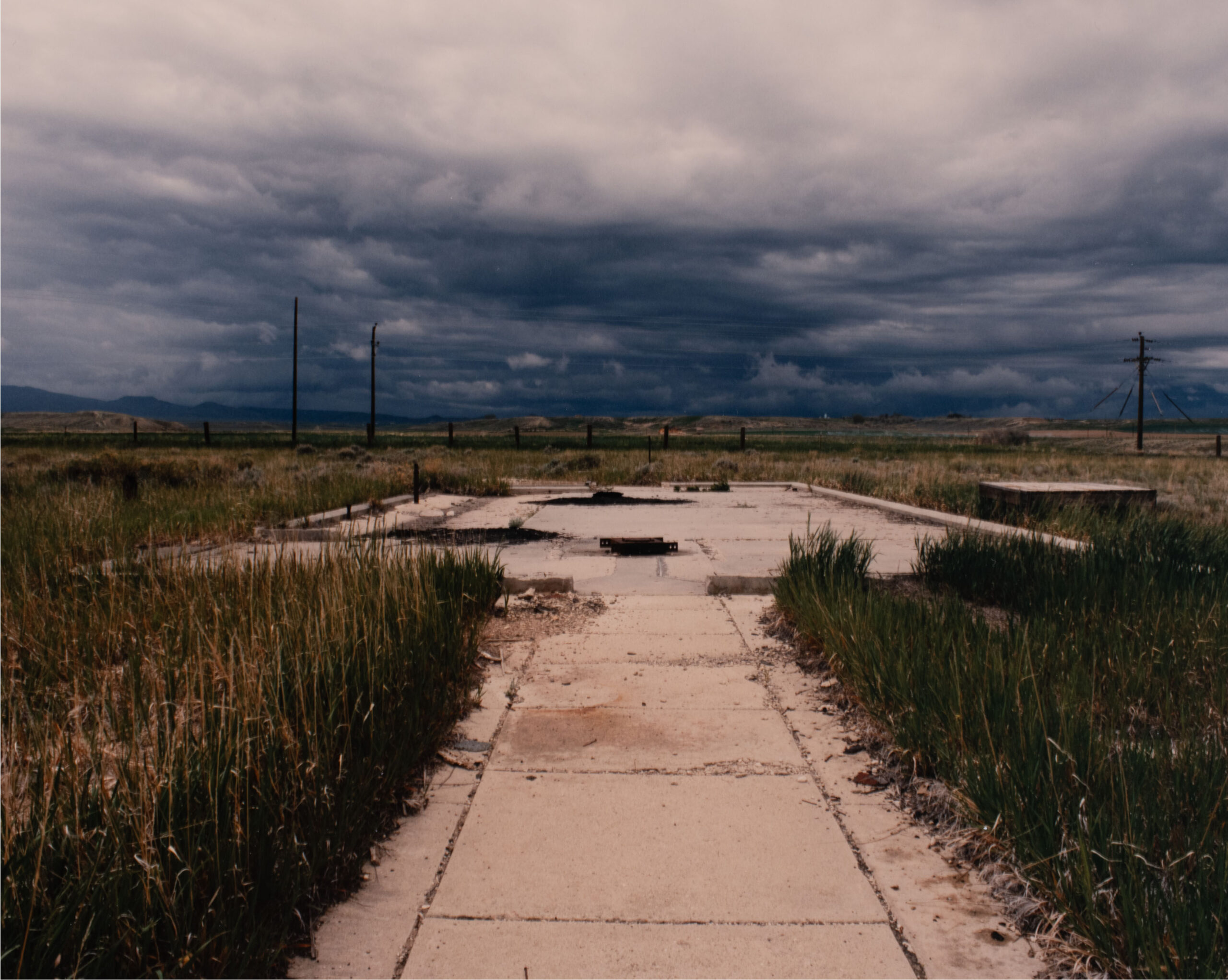
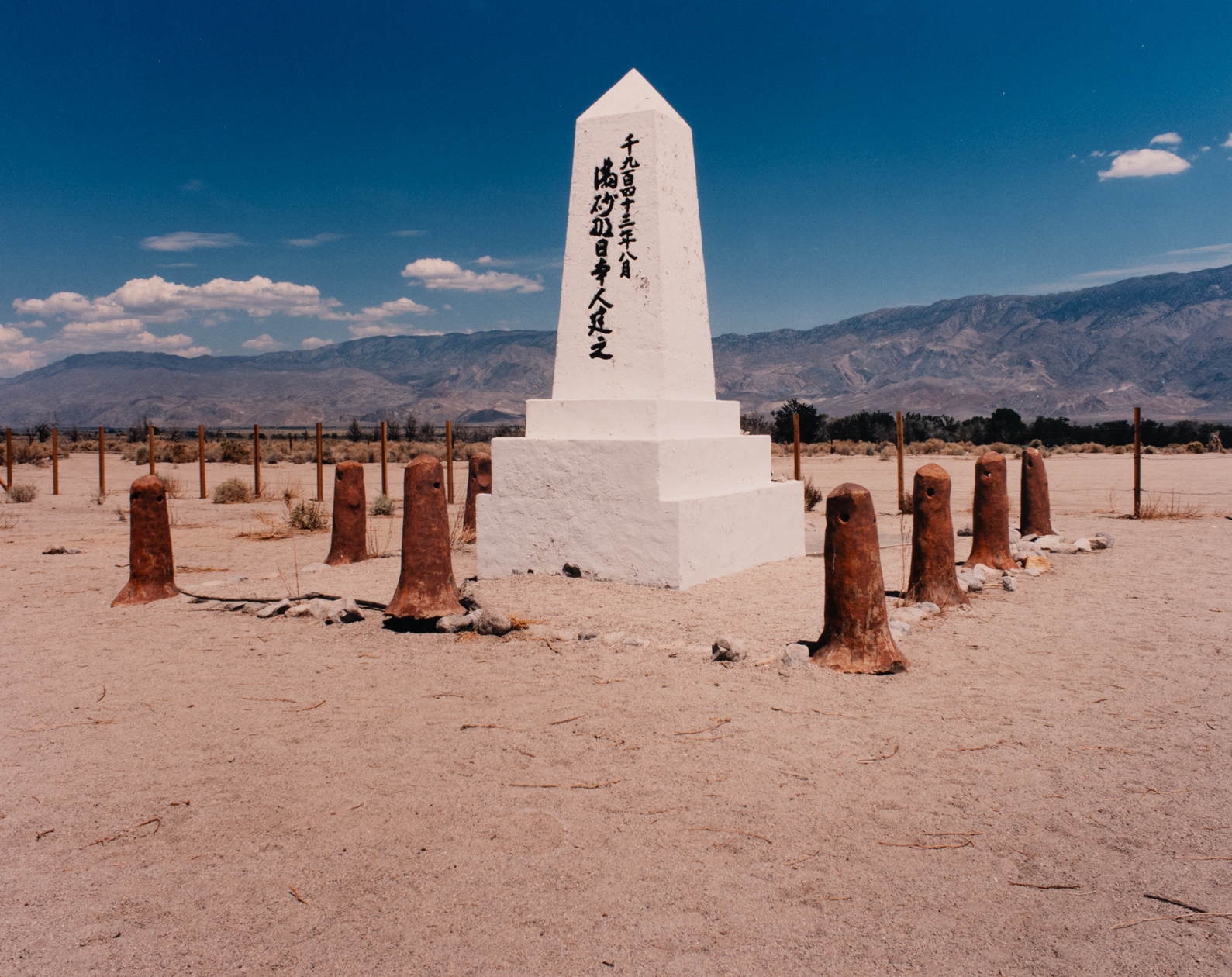
In the 1980s and 1990s, two American photographers based in New Mexico, Joan Myers (b. 1944) and Patrick Nagatani (1945-2017), traveled independently to find what were relatively unmarked sites of World War II detention camps, photographing the remains.
Myers’ images capture the scarce traces of the incarcerees’ residence on the land and the poignancy of the everyday objects they left behind. Nagatani, whose parents and grandparents were among the incarcerated during the war, traveled to the ten primary relocation sites, which he refers to as concentration camps.
Accompanying these photographs from the museum’s collection is a painting by New Mexican artist Jerry West (b. 1933), whose father and uncle worked at an incarceration facility in Santa Fe, one of four confinement sites in New Mexico (now designated by a marker on a hill at the Frank S. Ortiz Park).
The Tanka poems included here appear in Poets Behind Barbed Wire, edited and translated by Jiro Nakano and Kay Nakano, Bamboo Ridge Press, 1983. Kaiho Soga lived in Hawaii and was imprisoned primarily in New Mexico, at Lordsburg and Santa Fe.
The exhibition coincides with Reclaiming the Future: The Legacy of Japanese American Incarceration, on view at the museum’s Vladem Contemporary from September 5, 2026, through May 31, 2027.
Featured Art